Ask a room of parents about bedtime and you’ll hear the same things: one more drink, one more story, one more question about where the sun goes. Nobody has a perfect bedtime. But a predictable one is within reach, and a story is usually at the center of it.
This post is about the last twenty minutes of the day: what a calm routine tends to look like, and how the KidsGotWings reader — with its read-along narration, bedtime mode and sleep timer — can fit into it without taking it over.
Why routine helps
Advice on children’s sleep is remarkably consistent on one point: a regular, predictable wind-down helps. The same few steps, in the same order, at roughly the same time, give a child’s body and mind a signal that sleep is coming. The steps themselves matter less than doing them the same way each night.
Stories are a natural last step. They’re quiet, they happen in bed, and they have an ending — which is a useful thing for the day to have, too.
The reader, and what each part is for
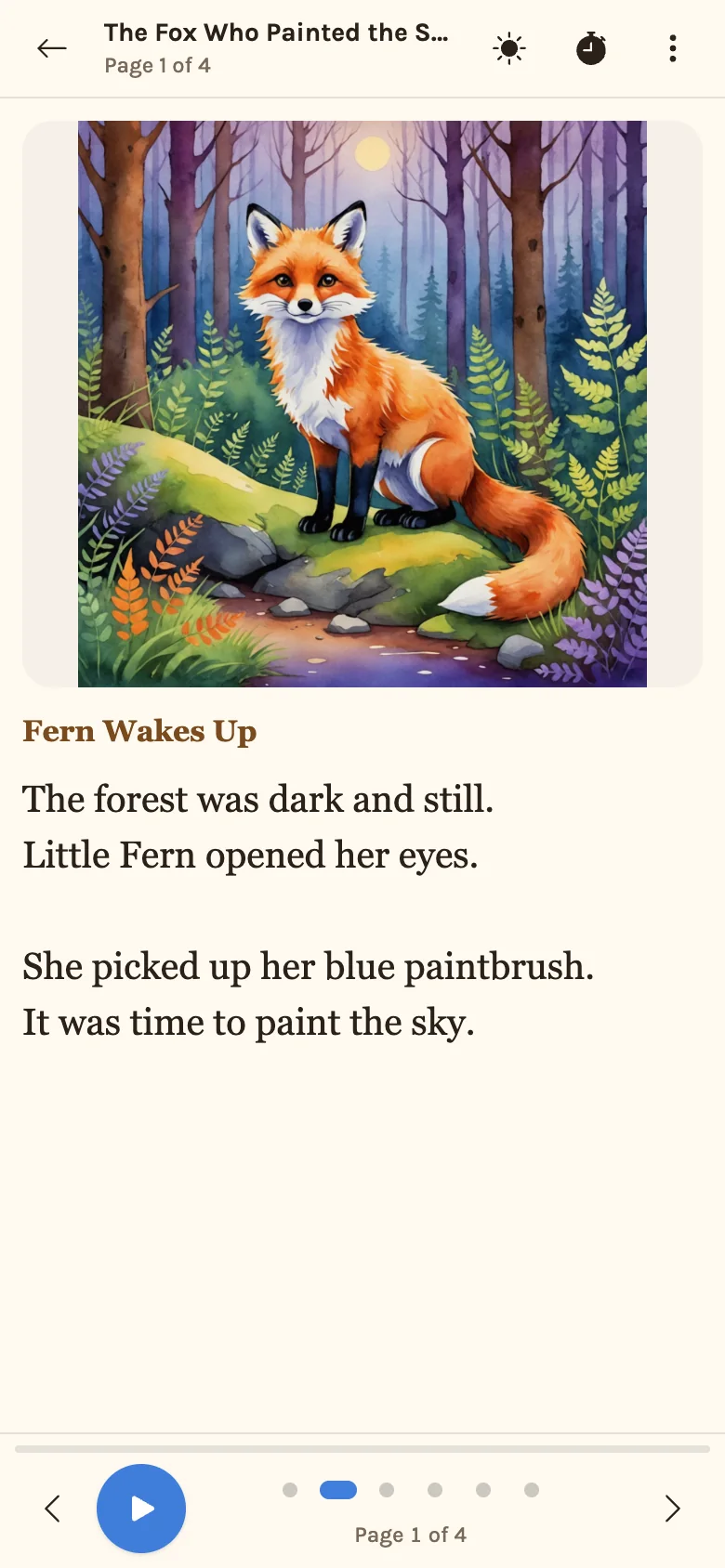
Every story opens in a reader that turns it into a picture book: one page per section, with its illustration and its words.
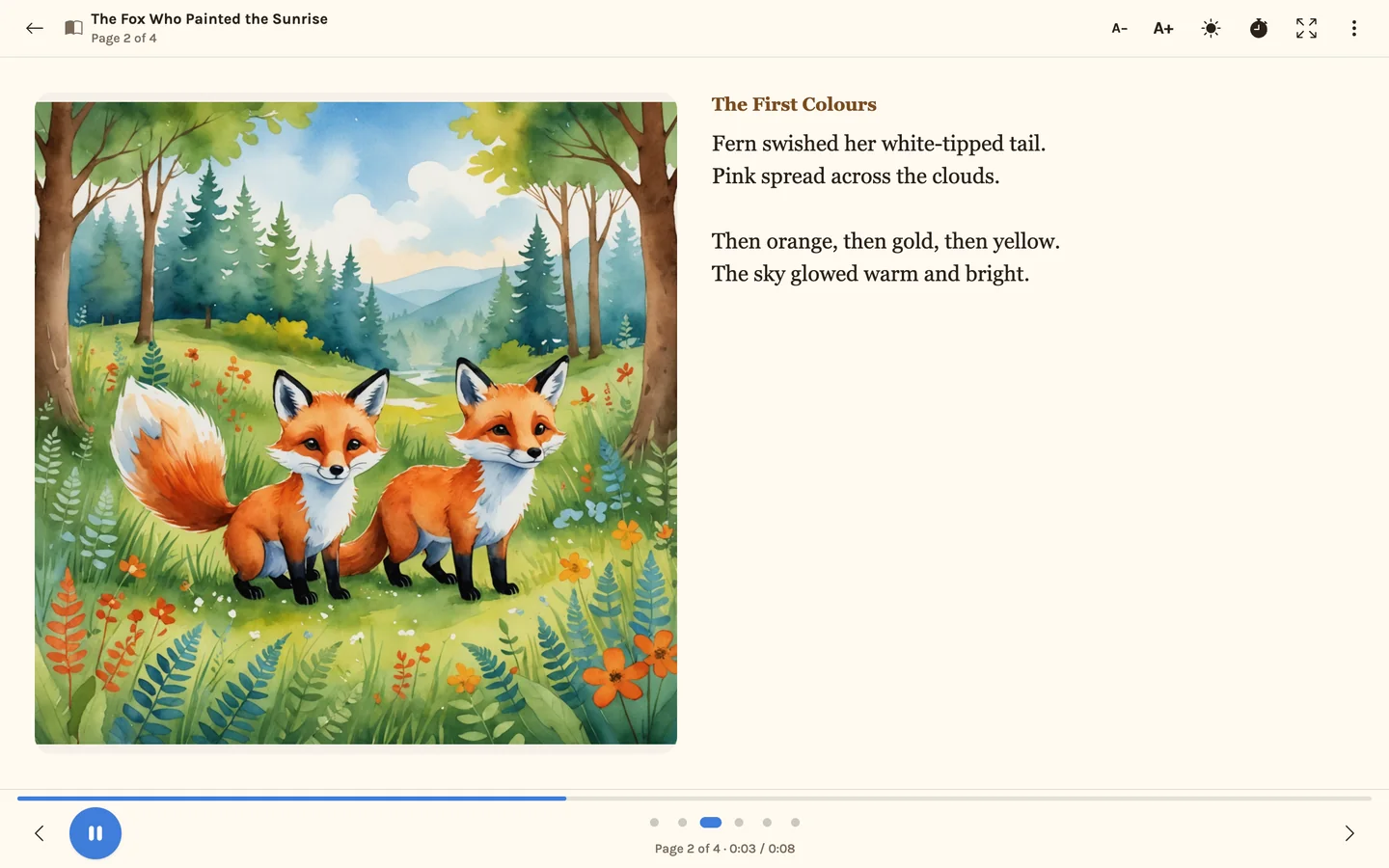
Read-along
If the story has been narrated, you can play the narration as you turn the pages, so a child can follow the words while they listen. Or switch the narration off and read it yourself — the reader works just as well as a book you hold together.
Bedtime mode
Bedtime mode calms the screen down for a dark room. It’s meant for the last story of the night, when the lights are already low and you don’t want a bright page undoing your good work.
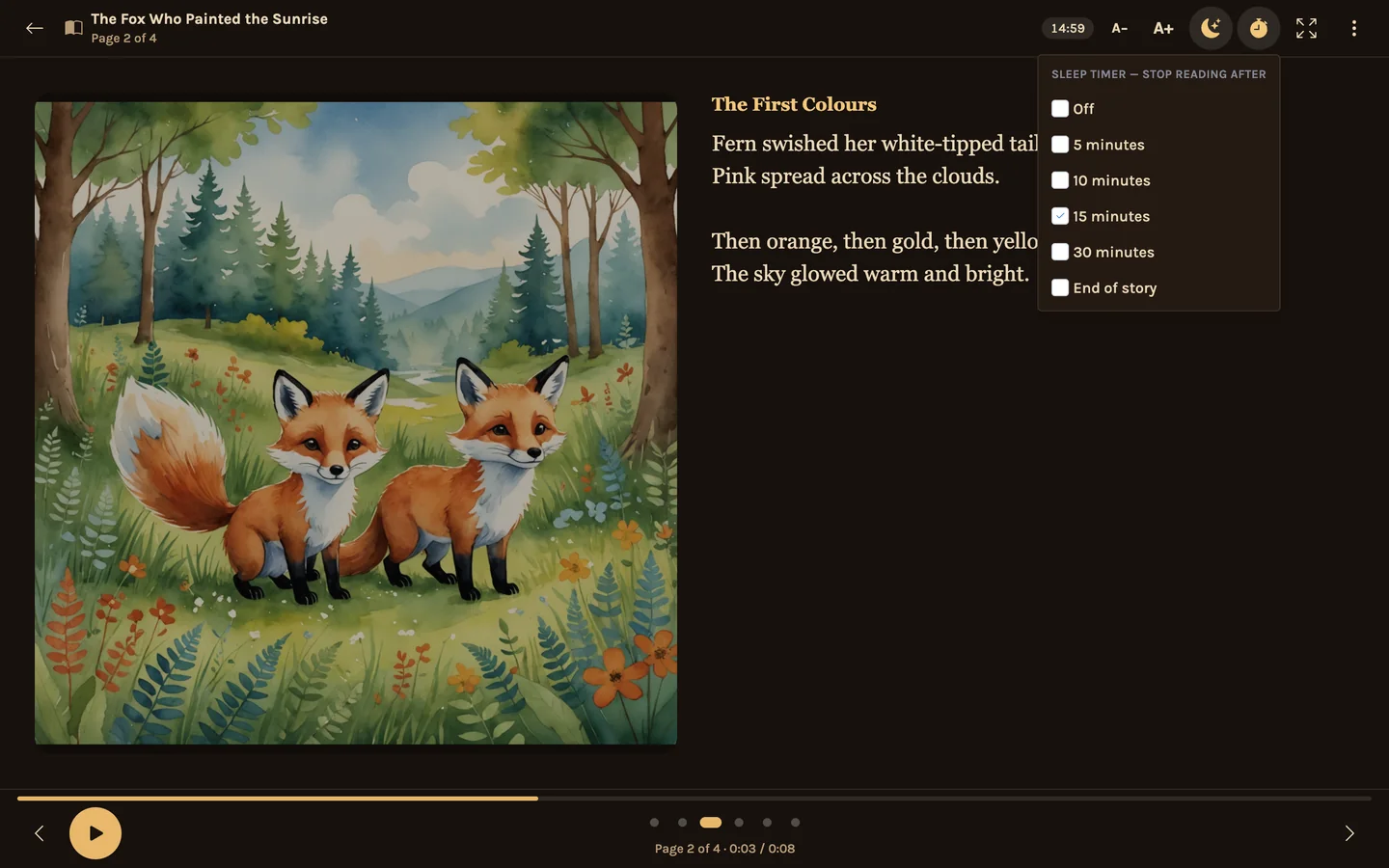
Sleep timer
The sleep timer stops the story by itself after the time you choose. Set it, put the device down, and you don’t have to reach over a nearly-asleep child to press pause.
A twenty-minute wind-down
Here’s one way to put it together. Adjust the times to your child; keep the order the same every night.
- Bath or wash, teeth, pajamas (10 minutes). Lights lower than they were at dinner. Say what’s coming: “Teeth, then story, then sleep.”
- Into bed, choose the story (2 minutes). Offer two choices, not the whole library. Favorites make this quick — the ones you’ve marked are easy to find again.
- The story (5–8 minutes). Open it in the reader with bedtime mode on. Turn the pages together, or let the narration carry it while you sit close.
- One quiet question (1 minute). “What was your favorite part?” Not a quiz.
- Lights out, same words every night (1 minute). The same goodnight phrase, the same order of hugs. Then leave, or stay quietly, as your family does.
About screens at bedtime
It would be odd for us not to mention it: general guidance for families is to keep bright, stimulating screens out of the last part of the evening. A storybook reader is a calmer thing than a cartoon or a game, but it is still a screen. Here’s how we’d suggest handling that honestly:
- Use bedtime mode, and turn the device’s own brightness down as well.
- Make it shared, not solo. The reader is designed for a grown-up and a child together, the way a book is — not as something to hand over and walk away from.
- Try audio-only. Start the narration, set the sleep timer, and put the device face-down on the shelf. The story becomes something to listen to with eyes closed.
- Print the favorites. Any story can be printed as a picture book. A paper copy by the bed needs no screen at all — see From screen to keepsake.
- Decide the number first. “One story tonight” is easier to hold to when it’s said before the first page.
Stories that help children settle
Some stories wake a child up. Bedtime wants the other kind. When you write the prompt, ask for it:
- A slow rhythm. Repetition is soothing: saying goodnight to one thing after another, or a journey with the same small event at each stop.
- A quiet ending. Ask for it in so many words: “It ends with everyone asleep.”
- Familiar characters. A series about the same character means less new information at the end of the day. Sequels are made for this.
- Nothing unresolved. Save cliffhangers for the afternoon.
A prompt that does all four:
“A sleepy bear walks home through the forest and says goodnight to each friend he passes — the owl, the fox, the river, the moon. Each one says goodnight back. It ends with the bear in his own bed, fast asleep.”
For more like this, see the cozy section of How to write a great bedtime-story prompt.
When you’re not the one doing bedtime
Routines wobble when the usual person is away. Two things help keep the story step steady:
- The same stories. Whoever is doing bedtime can open the same favorites from the family’s account.
- A familiar voice. If a parent has added their voice, a story can be narrated in it on the nights they’re traveling. It’s optional and needs that person’s consent — the details are in Read to them in your own voice from anywhere.
When it still goes wrong
It will, sometimes. A few things that tend to help, none of them magic:
- “One more story” every night? Agree the number before you start, and let the sleep timer be the one that says it’s over. It’s easier to accept from a timer than from a parent.
- Too excited by the story? Choose a lower-energy one tomorrow, or a story they already know well.
- Wide awake after lights out? Try audio-only with a short timer, and keep the room dark.
- A bad night? Go back to the same routine tomorrow. Consistency over a few weeks matters more than any single evening.
If sleep is a lasting struggle or you’re worried about it, your child’s doctor is the right person to ask. A story can make bedtime nicer; it isn’t a treatment for sleep problems.
The short version
- Same steps, same order, every night.
- The story is the last step, in bed.
- Bedtime mode on, brightness down, sleep timer set.
- Read together — or listen with eyes closed.
- A calm story with a quiet ending.
Goodnight.
Make tonight’s story
Describe it in a sentence, or pick your family as the characters. It’s free to start, and private unless you choose to share.
Create your first story