You’ll know when it happens. The story ends, the room is quiet, and a small voice says: “What happened next?”
That question is the best review a bedtime story can get. It’s also an invitation. KidsGotWings can continue a story — writing a sequel that picks up the same characters and world — so one good night can become a series your child looks forward to.
Why children love a series
Anyone who has read the same picture book forty nights running knows that children like the familiar. A series gives them the comfort of repetition and something new at the same time: the same fox, the same garden wall, a different small adventure.
It’s useful for bedtime, too. A story with characters a child already knows asks less of a tired mind. There’s no one new to meet; they can settle into it.
How “continue the story” works
- Open a story you’d like to continue.
- Choose Continue the story. You can add a short idea for what should happen next — or leave it blank and be surprised.
- A new story is written and illustrated, following on from the first. It takes a few minutes, like any new story.
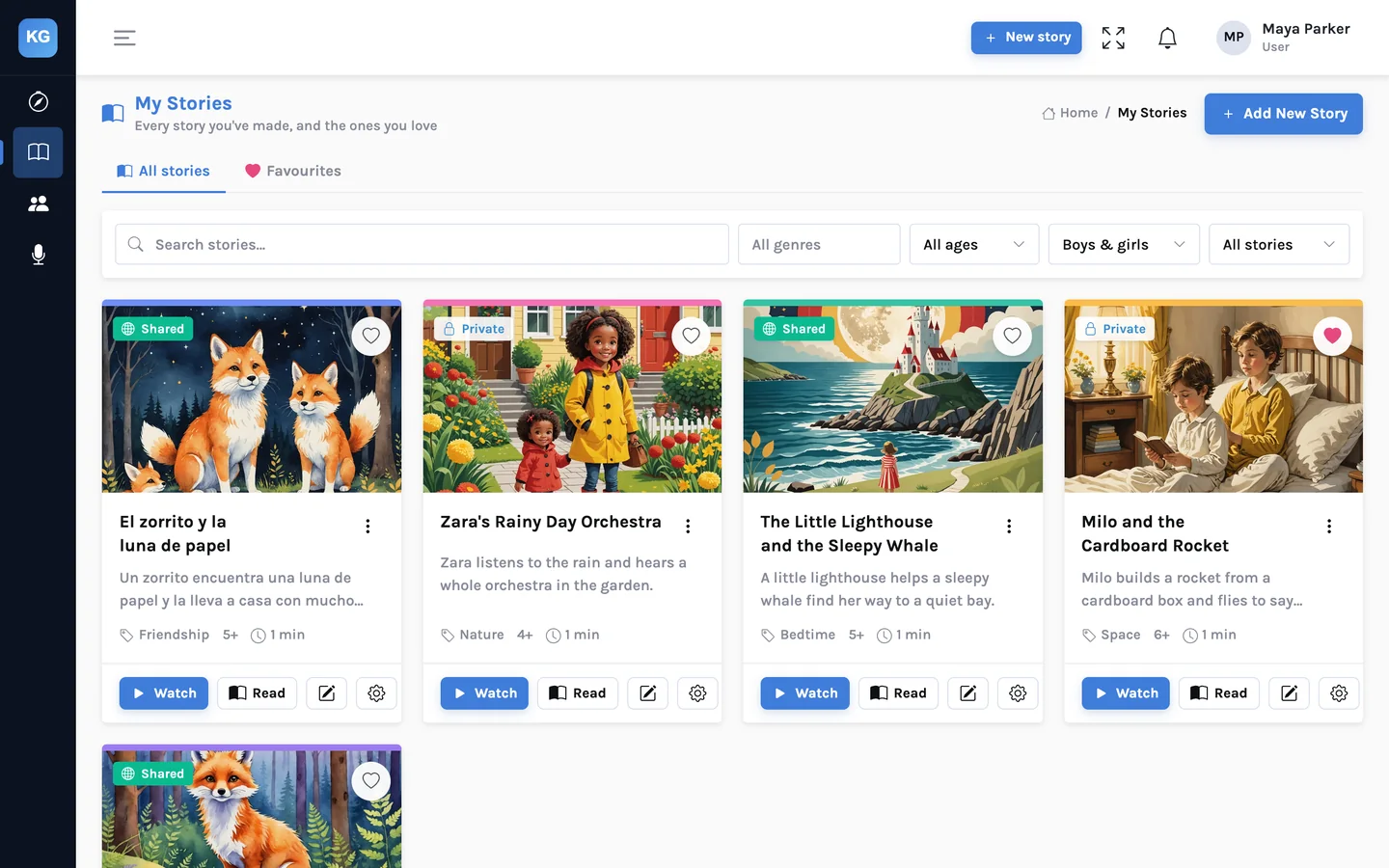
- The sequel is its own story. It appears in My Stories, private to you, and you can edit its sections, choose its voice and make its film just like any other.
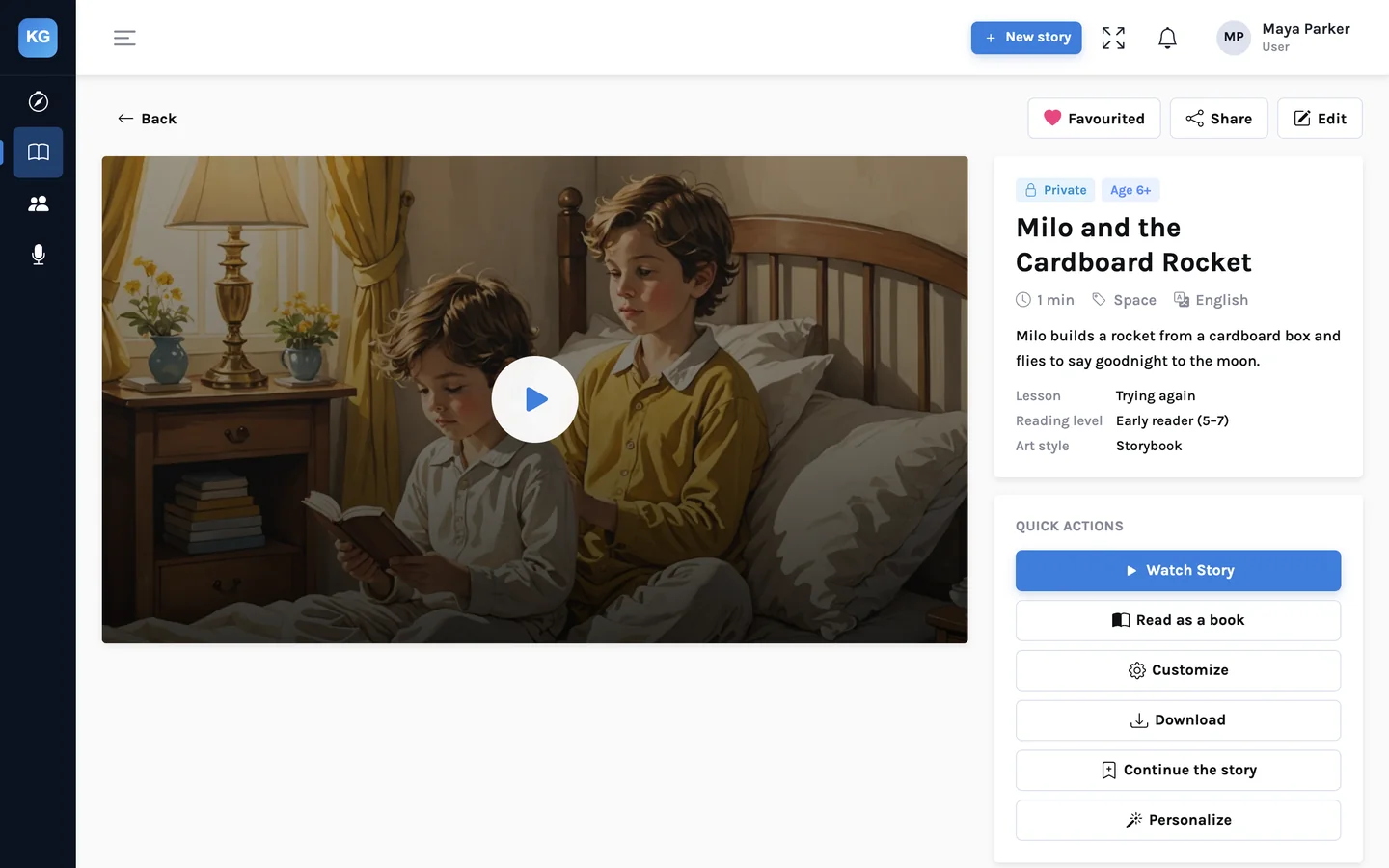
The original isn’t changed. You can continue the sequel too, and so on, for as long as the series is loved.
What makes a good sequel
Keep the frame, change the picture
The series that work best have a pattern. The same opening, the same kind of ending, and one new thing in the middle. Think of it as a frame:
- The same way in. “Every night, when the house was quiet, the fox tapped on Mira’s window.”
- One new small problem. Last time the moon was missing. This time the stars have fallen into the pond.
- The same way home. Back through the window, into bed, goodnight.
Let the idea do the steering
The optional idea you give a sequel is its prompt. One sentence is enough, as long as it names the new problem:
- The fox comes back. This time the stars have fallen into the pond and need fishing out before morning.
- It’s winter now. The fox has cold paws and Mira knits him four very small socks.
- The fox brings a friend: a shy owl who is afraid of flying at night.
Let characters grow, slowly
A series can follow your child. The first story was about being brave in the dark; three stories on, the hero is the one reassuring someone else. If you use the lesson option, a series is a gentle way to return to an idea over several weeks without repeating yourself.
A three-night series, planned
Mira and the Moon Fox — the series
| Night 1 | Mira and the Moon Fox — the moon is lost; it was hiding behind a cloud. Lesson: being brave in the dark. |
|---|---|
| Night 2 | Mira and the Fallen Stars — the stars are in the pond; Mira and the fox scoop them out with a colander. Lesson: asking for help. |
| Night 3 | Mira and the Owl Who Couldn’t Fly at Night — the fox’s friend is frightened; Mira teaches her what the fox taught Mira. Lesson: helping someone else be brave. |
| Kept the same | Watercolor art style · ages 5–7 · the same narrator · the same opening and closing lines |
And here’s how the second night might open. We wrote this excerpt ourselves as an illustration:
Example excerpt · Mira and the Fallen Stars
Every night, when the house was quiet, the fox tapped on Mira’s window. Tonight he tapped twice, which meant: hurry.
“It’s the stars,” he said. “There was a big wind. They’ve fallen in the pond, every one, and they can’t swim.”
Mira thought about this. Then she went to the kitchen and came back with the colander. “For scooping,” she explained. The fox agreed that this was very clever indeed.
Same window, same fox, same girl who is always ready. One new problem. That’s all a sequel needs.
Keeping a series consistent
Each story in a series is written and illustrated fresh, so a little care keeps them feeling like one set:
- Use the same options each time — the same art style, reading level and language — so the books look and sound like they belong together.
- Use the same narrator. A stock storyteller or a family voice; either way, the same one for the whole series.
- Expect small differences in the pictures. Characters are drawn anew for every page, so the fox may look a little different from story to story. If a picture is too far off, redraw it with a note such as “a small orange fox with a white tail tip, as before”.
- Edit for continuity. If the sequel forgets a detail that matters — the yellow boots, the name of the owl — fix it in the section’s text. It takes seconds.
- Name them like a series. “Mira and the…” makes them easy to find in My Stories and satisfying to line up.
Ten series to start
- The Night Bus: every story, the last bus of the night stops somewhere impossible — the moon, the bottom of the sea, a cloud.
- The Smallest Detective: a mouse solves one tiny household mystery per story. Who moved the cheese? Where do the socks go?
- Grandpa’s Hat: each night the fishing hat grants one very small wish, and it never goes quite to plan.
- The Bakery at the Edge of the Woods: a different forest animal orders a different impossible cake.
- Postcards from Pip: an otter travels the river and each story is a new place and a new friend.
- The Weather Children: our children are in charge of tomorrow’s weather, and every night they have to choose.
- The Sleepy Dragon: a dragon who keeps almost falling asleep in the middle of important dragon business.
- The Garden at Night: one creature per story — the snail, the moth, the hedgehog — and what they get up to after dark.
- The Shrinking Machine: the children shrink to visit a new small world each time: the ant hill, the bookshelf, the fruit bowl.
- The Moon’s Helpers: every month the moon needs a different job done, and knows exactly who to ask.
Making it part of the routine
- Pick a series night. “Fox story on Fridays” gives the week a shape and gives you six nights off.
- Let your child choose the problem. Ask at breakfast: “What should happen to the fox next?” Type their answer as the sequel’s idea. They’ll remember, and they’ll be waiting.
- Re-read before you continue. Read last week’s story first, then the new one. Repetition is half the pleasure.
- Print the set. A finished series, printed and stapled, is a proper collection — see From screen to keepsake.
- Know when to stop. Some series run for a year; some are done in three nights. When your child stops asking, start a new one.
Sequels are new stories, so each one counts toward your daily free limit like any other. One a night is the natural pace anyway.
Start with the one they already love
You probably already know which story it is. Open it, choose Continue the story, and type one sentence about what goes wrong next. If you need a first story to build on, begin with How to write a great bedtime-story prompt or Make your child the hero.
And when the small voice asks what happened next — now you can find out together.
Make tonight’s story
Describe it in a sentence, or pick your family as the characters. It’s free to start, and private unless you choose to share.
Create your first story